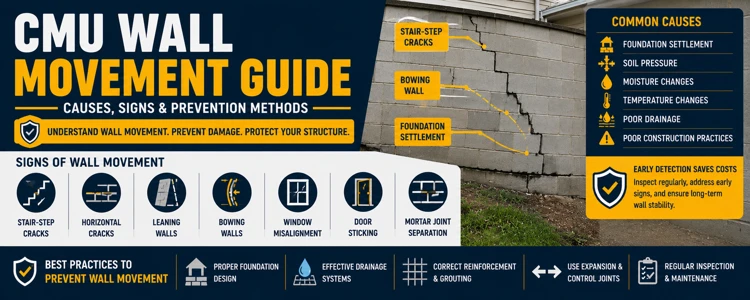
CMU wall movement is a common issue in masonry construction and can occur due to foundation settlement, moisture changes, temperature fluctuations, structural loads, or soil pressure.
Understanding wall movement helps property owners, contractors, and builders identify problems early and prevent costly structural repairs.
This guide explains the causes of CMU wall movement, warning signs, inspection methods, and prevention techniques.
What Is CMU Wall Movement?
CMU wall movement refers to any change in the position or alignment of a concrete masonry wall.
Movement may appear as:
- Cracks
- Leaning walls
- Bowing walls
- Settlement
- Joint separation
- Structural displacement
Some movement is minor and expected, while excessive movement may indicate structural concerns.
You can also read:
What Is a CMU Block?Why Do CMU Walls Move?
Several factors can cause masonry wall movement.
Common causes include:
- Foundation settlement
- Expansive soils
- Moisture changes
- Structural loading
- Temperature expansion
- Poor construction practices
Identifying the cause is essential before making repairs.
Foundation Settlement
Foundation settlement is one of the most common causes of wall movement.
Settlement may occur because of:
- Poor soil conditions
- Soil erosion
- Improper compaction
- Water infiltration
Settlement often leads to visible wall cracking and alignment issues.
You can also read:
CMU Foundation Wall GuideSoil Pressure
Soil pressure can push against masonry walls and cause movement.
This is especially common in:
- Basement walls
- Retaining walls
- Below-grade structures
Excessive pressure may cause:
- Bowing
- Leaning
- Horizontal cracking
You can also read:
CMU Basement Wall Guideand
CMU Retaining Wall GuideMoisture-Related Movement
Changes in moisture content can affect soil conditions and wall performance.
Common moisture issues include:
- Poor drainage
- Groundwater pressure
- Water intrusion
- Freeze-thaw cycles
Proper moisture management helps reduce movement risks.
You can also read:
CMU Wall Waterproofing GuideTemperature Expansion and Contraction
Concrete masonry expands and contracts as temperatures change.
Without proper movement control, temperature changes may cause:
- Cracking
- Joint separation
- Structural stress
Expansion joints and control joints help reduce these issues.
You can also read:
CMU Expansion Joint GuideCommon Signs of Wall Movement
Watch for:
- Stair-step cracks
- Horizontal cracks
- Leaning walls
- Bowing walls
- Window misalignment
- Door sticking
- Mortar joint separation
Early detection helps prevent larger problems.
How to Inspect Wall Movement
Inspection should include:
- Visual crack evaluation
- Alignment checks
- Foundation assessment
- Moisture inspection
- Structural opening inspection
You can also read:
CMU Wall Inspection GuideWall Movement Around Openings
Doors and windows often show the first signs of movement.
Look for:
- Cracks above openings
- Frame distortion
- Sticking doors
- Window misalignment
You can also read:
CMU Jamb Block Guideand
What Is a Lintel Block?Preventing Wall Movement
Prevention methods include:
- Proper foundation design
- Good drainage systems
- Reinforcement installation
- Expansion joints
- Regular inspections
These measures help improve long-term wall stability.
You can also read:
How to Reinforce a CMU Walland
CMU Rebar Spacing GuideRepairing Movement-Related Damage
Repair methods depend on the cause and severity of movement.
Common repairs include:
- Crack repair
- Foundation stabilization
- Drainage improvements
- Reinforcement upgrades
- Structural repairs
You can also read:
CMU Wall Crack Repair GuideAdvantages of Early Detection
Lower Repair Costs
Small issues are easier and less expensive to repair.
Better Structural Safety
Early repairs help maintain wall stability.
Reduced Moisture Problems
Correcting movement often improves waterproofing performance.
Longer Wall Lifespan
Proper maintenance helps extend masonry durability.
Better Property Value
Stable walls improve building condition and resale value.
Use a CMU Block Calculator
Before repairing or rebuilding masonry walls, accurate material estimation is important.
Our CMU Block Calculator helps estimate:
- Block quantities
- Mortar requirements
- Material costs
- Wall dimensions
Related Calculators
- CMU Block Calculator
- CMU Grout Calculator
- Mortar Calculator
- Foundation Calculator
- Rebar Calculator
- Concrete Calculator
Frequently Asked Questions
Is wall movement normal?
Minor movement can occur naturally, but excessive movement may indicate structural problems.
What causes CMU walls to bow?
Soil pressure, moisture issues, and structural loading are common causes.
Are wall cracks always caused by movement?
Not always, but many cracks are related to settlement or structural movement.
Can wall movement be repaired?
Yes. Repair methods depend on the cause and severity of the movement.
Related Articles
- What Is a CMU Block?
- CMU Foundation Wall Guide
- CMU Basement Wall Guide
- CMU Retaining Wall Guide
- CMU Wall Crack Repair Guide
- CMU Wall Waterproofing Guide
- CMU Wall Inspection Guide
- CMU Wall Maintenance Guide
- How to Reinforce a CMU Wall
- CMU Rebar Spacing Guide
Final Thoughts
CMU wall movement can result from foundation settlement, soil pressure, moisture changes, and structural loading. Understanding the causes and warning signs of wall movement helps property owners identify issues early, reduce repair costs, and maintain long-term structural performance.