
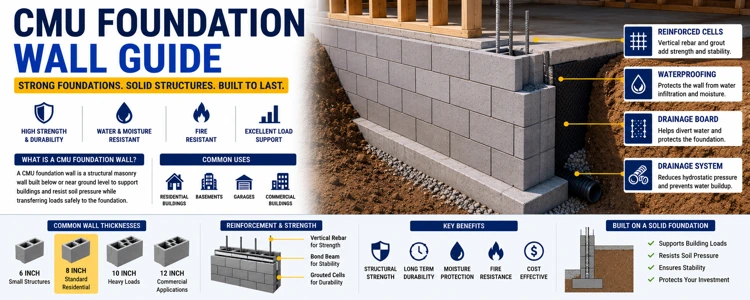
A:
CMU foundation wall
is a structural masonry wall built below or near ground level to support:
- Buildings
- Floors
- Structural loads
- Roof systems
Foundation walls transfer building loads safely into:
- Footings
- Soil
- Structural foundations
CMU foundation walls are commonly used in:
- Residential construction
- Commercial buildings
- Basements
- Structural masonry systems
Because of their strength and durability, concrete masonry foundation walls are widely used in modern construction.
What Does CMU Stand For?
CMU
stands for:
Concrete Masonry Unit
These concrete blocks are commonly used because they are:
- Strong
- Durable
- Fire-resistant
- Cost-effective
CMU blocks are widely used in:
- Structural walls
- Foundations
- Retaining walls
- Reinforced masonry systems
You can also read:
What Is a CMU Block?What Is a Foundation Wall?
A:
foundation wall
is a structural wall that supports and transfers building loads into the ground.
Foundation walls help:
- Support structural loads
- Stabilize buildings
- Resist soil pressure
- Protect against settlement
Without strong foundation systems:
buildings may experience:
- Cracking
- Structural movement
- Settlement damage
- Foundation failure
How CMU Foundation Walls Work
CMU foundation walls transfer structural loads downward into:
- Footings
- Soil
- Foundation systems
These walls also resist:
- Lateral soil pressure
- Ground movement
- Moisture exposure
Proper foundation wall design usually includes:
- Reinforcement
- Drainage systems
- Waterproofing
- Structural engineering
Common Uses of CMU Foundation Walls
CMU foundation walls are commonly used in:
- Residential homes
- Basement systems
- Commercial buildings
- Garages
- Structural retaining systems
- Crawl spaces
They are especially popular in:
- Cold-weather regions
- Basement construction
- Reinforced masonry structures
CMU Wall Thickness for Foundation Walls
Wall thickness plays an important role in:
- Structural strength
- Soil resistance
- Building support
- Load-bearing capacity
Common foundation wall thicknesses include:
| Wall Thickness | Typical Use |
|---|---|
| 6 inch | Small structures |
| 8 inch | Standard residential foundations |
| 10 inch | Heavy structural loads |
| 12 inch | Commercial foundation systems |
The:
8-inch CMU foundation wall
is one of the most commonly used residential masonry foundation systems.
You can also read:
CMU Wall Thickness GuideReinforcement in CMU Foundation Walls
Most foundation walls require reinforcement because they resist:
- Structural loads
- Soil pressure
- Water pressure
- Ground movement
Common reinforcement methods include:
- Vertical rebar
- Horizontal reinforcement
- Bond beam systems
- Grouted masonry cells
Reinforcement improves:
- Structural stability
- Crack resistance
- Load-bearing capacity
You can also read:
How to Reinforce a CMU WallBond Beam Reinforcement
Bond beam systems strengthen foundation walls by creating reinforced horizontal beams.
These systems improve:
- Structural continuity
- Load distribution
- Wall rigidity
Bond beam blocks commonly contain:
- Horizontal steel reinforcement
- Concrete grout filling
You can also read:
What Is a Bond Beam Block?Waterproofing CMU Foundation Walls
Foundation walls are exposed to:
- Moisture
- Groundwater
- Soil pressure
Proper waterproofing helps prevent:
- Water infiltration
- Basement leaks
- Mold growth
- Structural deterioration
Common waterproofing methods include:
- Membrane coatings
- Drainage boards
- Waterproof sealants
- Exterior drainage systems
Drainage Around Foundation Walls
Drainage is extremely important for:
foundation wall protection
Without proper drainage:
water pressure may build against the wall and cause:
- Cracking
- Leakage
- Structural damage
- Basement moisture problems
Common drainage systems include:
- Gravel backfill
- Drain pipes
- Weeping tile systems
- Sump pumps
Foundation Footings
Strong footings are essential for:
structural stability
Footings help:
- Distribute building loads
- Prevent settlement
- Improve wall support
Most masonry foundation walls use:
- Reinforced concrete footings
- Compacted soil bases
- Engineered foundation systems
You can also use:
Foundation CalculatorCMU Block Sizes for Foundation Walls
Several standard CMU sizes are commonly used for foundation systems.
| Nominal Size | Common Use |
|---|---|
| 6x8x16 | Small foundation walls |
| 8x8x16 | Standard residential foundations |
| 12x8x16 | Heavy-load foundation systems |
The:
8x8x16 CMU block
is one of the most common foundation wall block sizes.
You can also read:
CMU Block Sizes ChartFoundation Walls and Seismic Design
In earthquake-prone regions:
seismic reinforcement
may be necessary.
Seismic foundation systems often include:
- Vertical rebar
- Horizontal bond beams
- Fully grouted masonry cells
- Reinforced footings
You can also read:
CMU Seismic Design GuideAdvantages of CMU Foundation Walls
1. High Structural Strength
CMU foundation walls provide:
- Excellent load-bearing capacity
- Structural stability
- Long-term durability
2. Excellent Fire Resistance
Concrete masonry walls provide:
- Fire resistance
- Heat protection
- Structural safety
3. Long Lifespan
Properly constructed masonry foundations can last for:
decades
with minimal maintenance.
4. Better Moisture Resistance
Proper waterproofing and drainage improve:
- Moisture protection
- Basement performance
- Structural durability
5. Cost-Effective Construction
CMU foundations are often:
- Cost-effective
- Durable
- Easier to repair
than some alternative systems.
Common Problems in Foundation Walls
Foundation walls may experience:
- Cracking
- Water infiltration
- Settlement movement
- Structural stress
Proper:
- Reinforcement
- Waterproofing
- Drainage
- Foundation design
help reduce these risks.
Use a CMU Block Calculator
Before building a foundation wall, accurate material estimation is important.
Our:
CMU Block Calculatorhelps estimate:
- Concrete block quantities
- Mortar requirements
- Material costs
- Wall dimensions
You can also use:
- Foundation Calculator
- Rebar Calculator
- Concrete Volume Calculator
- Mortar Calculator
- Gravel Calculator
for additional construction estimation.
Frequently Asked Questions
What is a CMU foundation wall?
A CMU foundation wall is a structural masonry wall designed to support:
- Building loads
- Floors
- Roof systems
- Structural foundations
Are CMU foundation walls strong?
Yes.
Properly reinforced CMU foundation walls provide:
- Excellent structural strength
- Long-term durability
- Strong load-bearing performance
Why is waterproofing important for foundation walls?
Waterproofing helps prevent:
- Basement leaks
- Water infiltration
- Moisture damage
- Structural deterioration
What is the most common CMU foundation wall thickness?
The:
8-inch CMU foundation wall
is one of the most common residential masonry foundation systems.
Related Articles
- What Is a CMU Block?
- How to Reinforce a CMU Wall
- What Is a Bond Beam Block?
- CMU Retaining Wall Guide
- CMU Wall Thickness Guide
- CMU Block Sizes Chart
- CMU Seismic Design Guide
Final Thoughts
CMU foundation walls are an essential part of structural masonry construction because they provide:
- Building support
- Structural stability
- Long-term durability
- Excellent load resistance
Proper reinforcement, waterproofing, drainage, and foundation design help create safer and stronger masonry foundation systems for:
- Residential homes
- Commercial buildings
- Basement construction
Understanding foundation wall construction helps contractors, engineers, builders, and homeowners build durable and reliable structural masonry systems.