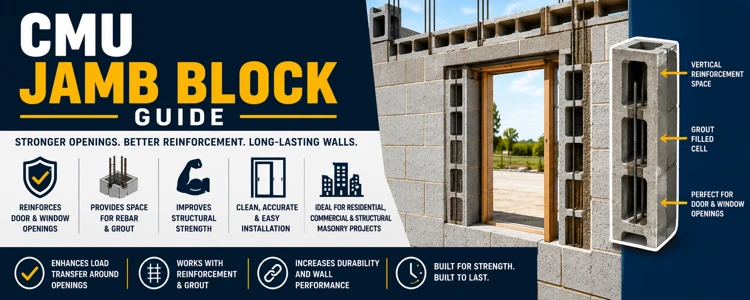
CMU jamb blocks are specialized concrete masonry units designed to create stronger and cleaner openings for doors and windows. These blocks play an important role in masonry construction because they provide space for reinforcement and improve structural performance around wall openings.
Jamb blocks are commonly used in residential, commercial, and structural masonry projects.
This guide explains what a CMU jamb block is, how it works, common applications, installation basics, and how it differs from other masonry block types.
What Is a CMU Jamb Block?
A CMU jamb block is a special type of concrete masonry unit designed for use at:
- Door openings
- Window openings
- Reinforced wall edges
- Structural openings
Unlike standard blocks, jamb blocks contain a shaped opening that allows reinforcement and grout placement.
You can also read:
What Is a CMU Block?Why Are Jamb Blocks Used?
Jamb blocks improve structural performance around openings.
Main benefits include:
- Space for reinforcement
- Better load transfer
- Cleaner wall openings
- Improved structural strength
- Easier installation
Because openings weaken masonry walls, jamb blocks help restore structural continuity.
Where Are CMU Jamb Blocks Used?
Jamb blocks are commonly installed around:
- Doors
- Windows
- Garage openings
- Structural wall openings
- Commercial masonry systems
They are especially useful where reinforced masonry construction is required.
How a CMU Jamb Block Works
A jamb block creates an internal channel that allows:
- Vertical rebar placement
- Grout filling
- Structural reinforcement
Once reinforcement and grout are installed, the wall becomes significantly stronger.
You can also read:
How to Reinforce a CMU Walland
CMU Rebar Spacing GuideJamb Block vs Standard CMU Block
There are several differences between standard blocks and jamb blocks.
| Feature | Standard CMU | Jamb Block |
|---|---|---|
| Openings Support | Limited | Excellent |
| Reinforcement Space | Limited | Improved |
| Grouting | Optional | Common |
| Structural Support | Standard | Enhanced |
Jamb blocks are specifically designed to improve wall openings.
Jamb Block vs Lintel Block
Many people confuse jamb blocks with lintel blocks.
Main differences:
Jamb Blocks:
- Installed vertically
- Reinforce opening sides
- Support wall edges
Lintel Blocks:
- Installed horizontally
- Support loads above openings
- Create reinforced beams
You can also read:
What Is a Lintel Block?Reinforcement and Grouting
Most jamb block systems require:
- Rebar
- Grout
- Structural reinforcement
These materials work together to improve load transfer and wall strength.
You can also read:
CMU Grouting Methods Guideand use:
CMU Grout CalculatorCommon Jamb Block Sizes
Jamb blocks are available in several standard sizes.
Common sizes include:
| Size | Typical Use |
|---|---|
| 4x8x16 | Interior openings |
| 6x8x16 | Residential walls |
| 8x8x16 | Structural walls |
| 10x8x16 | Commercial projects |
You can also read:
CMU Block Sizes ChartInstallation Basics
Typical installation steps include:
- Install jamb blocks around openings
- Place reinforcement
- Install grout
- Verify alignment
- Complete surrounding wall construction
Proper installation improves structural performance and long-term durability.
Common Mistakes
Avoid these mistakes:
- Missing reinforcement
- Poor grout placement
- Incorrect alignment
- Using wrong block size
- Improper opening dimensions
These issues can reduce structural performance.
Advantages of CMU Jamb Blocks
Improved Opening Strength
Jamb blocks reinforce weak wall openings.
Better Reinforcement Placement
They provide space for vertical reinforcement.
Cleaner Construction
They simplify door and window installation.
Improved Structural Performance
Jamb blocks improve load transfer around openings.
Long-Term Durability
Properly installed jamb systems improve wall lifespan.
Use a CMU Block Calculator
Before starting masonry construction, accurate material estimation is important.
Our CMU Block Calculator helps estimate:
- Concrete block quantities
- Mortar requirements
- Material costs
- Wall dimensions
Related Calculators
- CMU Block Calculator
- CMU Grout Calculator
- Mortar Calculator
- Foundation Calculator
- Rebar Calculator
- Concrete Calculator
Frequently Asked Questions
What is a CMU jamb block?
A CMU jamb block is a concrete masonry unit designed to reinforce doors, windows, and wall openings.
Are jamb blocks load-bearing?
They can support structural openings when properly reinforced and grouted.
Do jamb blocks require grout?
Most reinforced jamb block installations require grout.
What is the difference between jamb and lintel blocks?
Jamb blocks reinforce opening sides, while lintel blocks support loads above openings.
Related Articles
- What Is a CMU Block?
- Types of CMU Blocks
- What Is a Lintel Block?
- What Is a Bond Beam Block?
- What Is a Pilaster Block?
- CMU Rebar Spacing Guide
- How to Reinforce a CMU Wall
- CMU Grouting Methods Guide
- CMU Structural Wall Guide
- CMU Block Sizes Chart
Final Thoughts
CMU jamb blocks play an important role in reinforced masonry construction by strengthening doors, windows, and structural wall openings. Understanding jamb block applications, reinforcement requirements, grouting methods, and installation practices helps create stronger and more durable masonry systems.