Waterproofing is one of the most important aspects of concrete masonry construction. While CMU walls are strong and durable, they are not completely waterproof on their own.
Without proper waterproofing, moisture can enter through:
- Masonry pores
- Mortar joints
- Cracks
- Foundation connections
Proper waterproofing helps prevent water damage, mold growth, structural deterioration, and costly repairs.
What Is CMU Wall Waterproofing?
CMU wall waterproofing is the process of protecting concrete masonry walls from water penetration.
Waterproofing systems help:
- Block moisture intrusion
- Reduce water damage
- Protect structural components
- Improve building durability
CMU waterproofing is commonly used on:
- Basement walls
- Foundation walls
- Retaining walls
- Exterior masonry walls
You can also read:
What Is a CMU Block?Why Waterproofing Is Important
Water intrusion can cause several problems including:
- Mold growth
- Efflorescence
- Structural deterioration
- Interior moisture problems
- Foundation damage
Proper waterproofing helps extend the lifespan of masonry structures.
How Water Enters CMU Walls
Water can enter masonry walls through:
- Mortar joints
- Block pores
- Cracks
- Construction joints
- Improper drainage systems
Because concrete blocks are porous, moisture can travel through the wall if waterproofing measures are not installed.
Common CMU Waterproofing Methods
Several waterproofing methods are commonly used.
These include:
- Waterproof coatings
- Membrane systems
- Sealers
- Drainage systems
- Crack repair products
Each method serves a different purpose depending on project requirements.
Waterproof Coatings
Waterproof coatings are applied directly to the wall surface.
Benefits include:
- Moisture protection
- Easy application
- Cost-effective installation
Coatings are commonly used on:
- Basement walls
- Foundation walls
- Exterior masonry walls
Waterproof Membranes
Membrane systems provide one of the most effective waterproofing solutions.
These systems create a barrier that prevents water penetration.
Common membrane types include:
- Sheet membranes
- Liquid membranes
- Rubberized asphalt membranes
Membranes are frequently used on below-grade foundation walls.
You can also read:
CMU Foundation Wall GuideCMU Basement Wall Waterproofing
Basement walls are constantly exposed to soil moisture and groundwater.
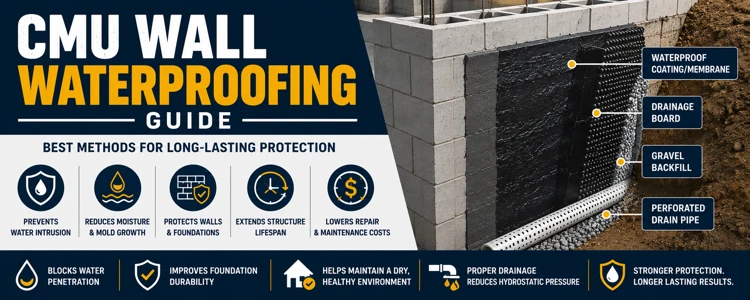
Common waterproofing methods include:
- Exterior membranes
- Drainage boards
- Foundation coatings
- Perimeter drainage systems
You can also read:
CMU Basement Wall GuideDrainage Systems
Proper drainage is often more important than waterproof coatings alone.
Common drainage components include:
- French drains
- Perforated drain pipes
- Gravel backfill
- Drainage mats
Good drainage reduces hydrostatic pressure around masonry walls.
Waterproofing Retaining Walls
Retaining walls are exposed to:
- Soil pressure
- Water pressure
- Groundwater
Because of these conditions, retaining walls often require:
- Waterproof membranes
- Drainage systems
- Gravel backfill
You can also read:
CMU Retaining Wall GuideCrack Repair Before Waterproofing
Cracks should be repaired before applying waterproofing systems.
Common repair methods include:
- Epoxy injection
- Polyurethane injection
- Masonry sealants
- Mortar repair
You can also read:
CMU Wall Crack Repair GuideWaterproofing and Reinforcement
Waterproofing works best when combined with proper reinforcement and construction practices.
Reinforced masonry systems typically provide:
- Better structural performance
- Reduced cracking
- Improved long-term durability
You can also read:
CMU Rebar Spacing Guideand
How to Reinforce a CMU WallCommon Waterproofing Mistakes
Avoid these common mistakes:
- Poor surface preparation
- Ignoring drainage systems
- Waterproofing over cracks
- Using incorrect materials
- Improper installation
These issues can reduce waterproofing effectiveness.
Advantages of Proper Waterproofing
Moisture Protection
Prevents water intrusion and moisture-related damage.
Longer Wall Lifespan
Protects masonry walls from deterioration.
Reduced Maintenance Costs
Minimizes future repair expenses.
Better Indoor Air Quality
Reduces mold and mildew growth.
Improved Structural Performance
Protects reinforcement and structural components.
Use a CMU Block Calculator
Before building a masonry wall, accurate material estimation is important.
Our CMU Block Calculator helps estimate:
- Concrete block quantities
- Mortar requirements
- Material costs
- Wall dimensions
Related Calculators
- CMU Block Calculator
- CMU Grout Calculator
- Mortar Calculator
- Foundation Calculator
- Rebar Calculator
- Concrete Calculator
Frequently Asked Questions
Are CMU walls waterproof?
No. Concrete masonry walls are water-resistant but not completely waterproof without additional protection.
What is the best waterproofing method for CMU walls?
Membrane systems combined with proper drainage generally provide the best protection.
Do basement walls need waterproofing?
Yes. Waterproofing helps prevent moisture intrusion and foundation damage.
Is drainage important for waterproofing?
Yes. Proper drainage reduces hydrostatic pressure and improves waterproofing performance.
Related Articles
- What Is a CMU Block?
- CMU Basement Wall Guide
- CMU Foundation Wall Guide
- CMU Retaining Wall Guide
- CMU Wall Crack Repair Guide
- CMU Rebar Spacing Guide
- How to Reinforce a CMU Wall
- CMU Grouting Methods Guide
- CMU Wall Thickness Guide
- CMU Load Bearing Wall Guide
Final Thoughts
CMU wall waterproofing plays a major role in protecting masonry structures from moisture damage and long-term deterioration. Combining waterproof coatings, membranes, drainage systems, crack repair, and proper reinforcement helps create durable and long-lasting masonry walls.