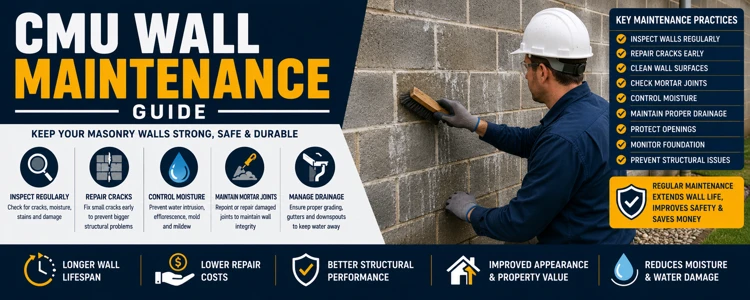
Proper CMU wall maintenance helps extend the lifespan of concrete masonry structures, reduce repair costs, and improve long-term performance.
Although concrete masonry unit (CMU) walls are known for their strength and durability, regular maintenance is still necessary to prevent moisture damage, cracking, mortar deterioration, and structural issues.
This guide explains how to maintain CMU walls, common problems to watch for, and best practices for preserving masonry structures.
What Is CMU Wall Maintenance?
CMU wall maintenance is the process of inspecting, cleaning, repairing, and protecting concrete masonry walls.
Regular maintenance helps:
- Prevent structural damage
- Reduce repair costs
- Improve durability
- Extend wall lifespan
- Maintain appearance
Proper maintenance is important for both residential and commercial masonry structures.
You can also read:
What Is a CMU Block?Why Maintenance Is Important
Even though CMU walls are durable, they remain exposed to:
- Rain
- Moisture
- Freeze-thaw cycles
- Wind
- Soil pressure
- Building movement
Without proper maintenance, these factors may lead to deterioration over time.
Perform Regular Inspections
Routine inspections help identify problems before they become expensive repairs.
Inspect walls for:
- Cracks
- Moisture damage
- Mortar deterioration
- Surface staining
- Structural movement
You can also read:
CMU Wall Inspection GuideRepair Cracks Early
Small cracks should be repaired before they become larger structural problems.
Common crack types include:
- Hairline cracks
- Vertical cracks
- Stair-step cracks
- Settlement cracks
Early repairs help prevent moisture penetration and further deterioration.
You can also read:
CMU Wall Crack Repair GuideControl Moisture
Moisture is one of the leading causes of masonry damage.
Common moisture issues include:
- Efflorescence
- Mold growth
- Surface deterioration
- Water infiltration
Keeping masonry dry improves long-term durability.
You can also read:
CMU Wall Waterproofing GuideClean CMU Walls Periodically
Cleaning helps remove:
- Dirt
- Mold
- Mildew
- Stains
- Surface contaminants
Use cleaning methods recommended for masonry surfaces to avoid damage.
Monitor Mortar Joints
Mortar joints often deteriorate faster than concrete blocks.
Inspect for:
- Missing mortar
- Crumbling joints
- Joint separation
Damaged mortar should be repaired promptly to maintain wall integrity.
Maintain Proper Drainage
Good drainage reduces moisture problems around masonry walls.
Check:
- Downspouts
- Gutters
- Drain pipes
- Surface grading
Proper drainage helps prevent water accumulation near foundations.
You can also read:
CMU Foundation Wall Guideand
CMU Basement Wall GuideInspect Reinforced Walls
Reinforced walls should be monitored for:
- Cracking
- Corrosion signs
- Moisture intrusion
- Structural movement
Proper reinforcement improves wall durability.
You can also read:
How to Reinforce a CMU Walland
CMU Rebar Spacing GuideProtect Structural Openings
Doors and windows are common locations for masonry problems.
Inspect for:
- Cracks
- Movement
- Settlement
- Frame misalignment
You can also read:
CMU Jamb Block Guideand
What Is a Lintel Block?Common Maintenance Mistakes
Avoid these common mistakes:
- Ignoring small cracks
- Delaying repairs
- Poor drainage maintenance
- Improper cleaning methods
- Ignoring moisture problems
These issues can lead to costly repairs later.
Advantages of Proper Maintenance
Longer Wall Lifespan
Regular maintenance helps masonry walls last longer.
Lower Repair Costs
Small repairs are usually less expensive than major structural repairs.
Better Structural Performance
Maintenance helps preserve wall strength and stability.
Improved Appearance
Clean and well-maintained walls look better and improve property value.
Reduced Moisture Problems
Proper maintenance helps prevent water-related damage.
Use a CMU Block Calculator
Before repairing or rebuilding masonry walls, accurate material estimation is important.
Our CMU Block Calculator helps estimate:
- Block quantities
- Mortar requirements
- Material costs
- Wall dimensions
Related Calculators
- CMU Block Calculator
- CMU Grout Calculator
- Mortar Calculator
- Foundation Calculator
- Rebar Calculator
- Concrete Calculator
Frequently Asked Questions
How often should CMU walls be inspected?
Most masonry walls should be inspected at least once per year.
What is the biggest threat to CMU walls?
Moisture intrusion is one of the most common causes of masonry deterioration.
Should small cracks be repaired?
Yes. Small cracks can become larger structural problems if ignored.
Why is drainage important?
Proper drainage helps reduce moisture buildup and foundation problems.
Related Articles
- What Is a CMU Block?
- CMU Wall Inspection Guide
- CMU Wall Crack Repair Guide
- CMU Wall Waterproofing Guide
- CMU Foundation Wall Guide
- CMU Basement Wall Guide
- CMU Structural Wall Guide
- How to Reinforce a CMU Wall
- CMU Rebar Spacing Guide
- CMU Jamb Block Guide
Final Thoughts
CMU wall maintenance is essential for preserving the strength, durability, and appearance of concrete masonry structures. Regular inspections, moisture control, crack repairs, drainage maintenance, and preventative care help extend wall lifespan and reduce long-term repair costs.