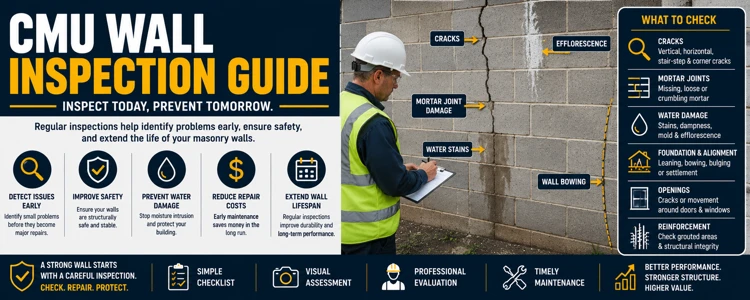
Regular CMU wall inspections help identify structural issues, moisture problems, cracks, and maintenance needs before they become serious and expensive repairs.
Whether you own a residential, commercial, or industrial property, inspecting concrete masonry walls can improve safety, durability, and long-term performance.
This guide explains what to inspect, common warning signs, and best practices for evaluating CMU walls.
What Is a CMU Wall Inspection?
A CMU wall inspection is the process of evaluating the condition of a concrete masonry wall.
The purpose of an inspection is to identify:
- Structural damage
- Cracking
- Moisture intrusion
- Settlement problems
- Reinforcement concerns
- Maintenance requirements
Regular inspections help prevent costly repairs and extend wall lifespan.
You can also read:
What Is a CMU Block?Why CMU Wall Inspections Are Important
Wall inspections help:
- Detect damage early
- Improve safety
- Prevent water intrusion
- Reduce repair costs
- Extend wall life
Many masonry problems start small and become more expensive if ignored.
When Should a CMU Wall Be Inspected?
Inspections are recommended:
- Annually
- After severe storms
- After earthquakes
- Before buying property
- After foundation movement
- Before major renovations
Regular evaluations help identify developing issues.
Check for Wall Cracks
Cracks are one of the most common masonry problems.
Inspect for:
- Vertical cracks
- Horizontal cracks
- Stair-step cracks
- Corner cracks
- Foundation cracks
Some cracks are cosmetic while others may indicate structural concerns.
You can also read:
CMU Wall Crack Repair GuideInspect Mortar Joints
Mortar joints often deteriorate before concrete blocks.
Look for:
- Missing mortar
- Loose joints
- Crumbling mortar
- Separation between blocks
Damaged mortar joints can allow moisture penetration and reduce wall strength.
Look for Water Damage
Water is one of the biggest threats to masonry structures.
Signs of moisture problems include:
- Damp walls
- Water stains
- Mold growth
- Efflorescence
- Surface deterioration
You can also read:
CMU Wall Waterproofing GuideCheck for Efflorescence
Efflorescence appears as a white powdery deposit on masonry surfaces.
It occurs when:
- Water enters masonry
- Dissolved salts migrate to the surface
- Moisture evaporates
Although not always structural, efflorescence often indicates moisture problems.
Inspect Reinforced Walls
Reinforced walls should be inspected for signs of:
- Cracking
- Movement
- Moisture intrusion
- Structural distress
Proper reinforcement improves durability and wall performance.
You can also read:
How to Reinforce a CMU Walland
CMU Rebar Spacing GuideEvaluate Wall Alignment
Inspect the wall for:
- Leaning
- Bowing
- Bulging
- Uneven settlement
These issues may indicate:
- Foundation movement
- Soil pressure
- Structural overload
Inspect Foundation Conditions
Foundation problems often affect masonry walls.
Look for:
- Settlement cracks
- Uneven floors
- Wall displacement
- Foundation deterioration
You can also read:
CMU Foundation Wall Guideand
CMU Basement Wall GuideCheck Structural Openings
Doors and windows should be inspected for:
- Misalignment
- Sticking
- Cracks above openings
- Movement around frames
These symptoms may indicate wall movement.
You can also read:
CMU Jamb Block Guideand
What Is a Lintel Block?Inspect Grouted Areas
If the wall contains reinforcement, inspect for:
- Surface cracking
- Moisture damage
- Structural movement
Grouted cells help improve wall strength and load transfer.
You can also read:
CMU Grouting Methods GuideCommon Warning Signs
Contact a professional if you notice:
- Large cracks
- Horizontal cracking
- Significant wall movement
- Severe moisture intrusion
- Foundation settlement
- Structural deformation
Early intervention often reduces repair costs.
Advantages of Regular Inspections
Early Problem Detection
Inspections help identify issues before major damage occurs.
Lower Repair Costs
Small repairs are usually less expensive than major structural repairs.
Improved Safety
Regular evaluations help identify structural concerns.
Longer Wall Lifespan
Maintenance and repairs can extend wall service life.
Better Property Value
Well-maintained masonry walls improve overall property condition.
Use a CMU Block Calculator
Before repairing or rebuilding masonry walls, accurate material estimation is important.
Our CMU Block Calculator helps estimate:
- Block quantities
- Mortar requirements
- Material costs
- Wall dimensions
Related Calculators
- CMU Block Calculator
- CMU Grout Calculator
- Mortar Calculator
- Foundation Calculator
- Rebar Calculator
- Concrete Calculator
Frequently Asked Questions
How often should a CMU wall be inspected?
Most masonry walls should be inspected at least once per year and after major weather events.
Are wall cracks always structural?
No. Some cracks are cosmetic, while others may indicate structural problems.
What is efflorescence?
Efflorescence is a white powdery deposit caused by moisture carrying salts to the wall surface.
When should I call a structural professional?
Large cracks, wall movement, foundation settlement, and severe moisture damage should be evaluated by a qualified professional.
Related Articles
- What Is a CMU Block?
- CMU Wall Crack Repair Guide
- CMU Wall Waterproofing Guide
- CMU Foundation Wall Guide
- CMU Basement Wall Guide
- CMU Structural Wall Guide
- How to Reinforce a CMU Wall
- CMU Rebar Spacing Guide
- CMU Grouting Methods Guide
- CMU Jamb Block Guide
Final Thoughts
CMU wall inspections are an essential part of maintaining safe and durable masonry structures. Regular inspections help identify cracks, moisture problems, settlement issues, and structural concerns before they become costly repairs.
By understanding what to inspect and when to take action, property owners can improve safety, reduce maintenance costs, and extend the life of their concrete masonry walls.