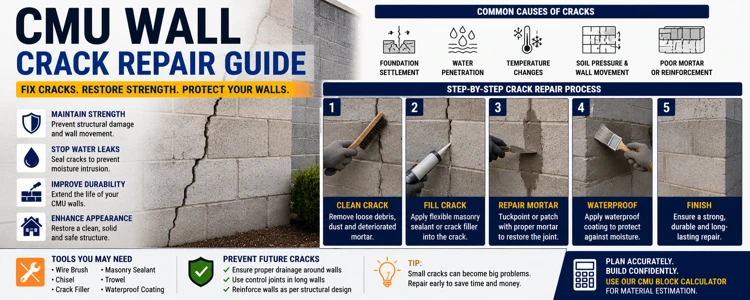
CMU walls are strong and durable, but over time masonry walls may develop:
- Small cracks
- Horizontal cracks
- Vertical cracks
- Stair-step cracks
- Foundation movement cracks
Cracks may occur because of:
- Settlement
- Moisture problems
- Structural movement
- Thermal expansion
- Poor reinforcement
This is why:
CMU wall crack repair
is important for maintaining:
- Structural stability
- Moisture protection
- Masonry durability
- Building safety
What Does CMU Stand For?
CMU
stands for:
Concrete Masonry Unit
These concrete blocks are commonly used because they are:
- Strong
- Durable
- Fire-resistant
- Cost-effective
CMU blocks are widely used in:
- Structural walls
- Foundation systems
- Retaining walls
- Commercial masonry construction
You can also read:
What Is a CMU Block?Why Do CMU Walls Crack?
Concrete masonry walls may crack because of:
- Foundation settlement
- Soil movement
- Moisture intrusion
- Thermal expansion
- Structural stress
- Poor drainage
Some cracks are:
cosmetic
while others may indicate:
structural problems
Proper inspection is important before starting repairs.
Common Types of CMU Wall Cracks
Several crack patterns commonly appear in masonry walls.
1. Vertical Cracks
Vertical cracks often develop because of:
- Shrinkage
- Thermal movement
- Minor settlement
Small vertical cracks are usually easier to repair.
2. Horizontal Cracks
Horizontal cracks may indicate:
- Soil pressure
- Water pressure
- Structural stress
- Reinforcement problems
These cracks may require:
structural inspection
especially in foundation walls.
3. Stair-Step Cracks
Stair-step cracks follow mortar joints in masonry walls.
These cracks are commonly caused by:
- Foundation settlement
- Structural movement
- Expansive soil
4. Hairline Cracks
Hairline cracks are usually:
- Small
- Surface-level
- Cosmetic
These cracks may develop because of:
- Minor shrinkage
- Temperature changes
- Surface movement
5. Foundation Wall Cracks
Foundation cracks may occur because of:
- Hydrostatic pressure
- Settlement
- Poor drainage
- Soil movement
You can also read:
CMU Foundation Wall GuideHow to Inspect a CMU Wall Crack
Before repairing cracks:
inspect the wall for:
- Crack width
- Crack direction
- Moisture damage
- Wall movement
- Structural bowing
Signs of serious structural problems may include:
- Large horizontal cracks
- Bulging walls
- Water leakage
- Severe settlement
Professional structural evaluation may be necessary for major damage.
Common Methods to Repair CMU Wall Cracks
Several repair methods are commonly used in masonry construction.
1. Masonry Crack Filler
Small cracks may be repaired using:
- Masonry caulk
- Concrete crack filler
- Flexible sealants
These materials help reduce:
- Water infiltration
- Further cracking
- Surface damage
2. Mortar Joint Repair
Damaged mortar joints may require:
tuckpointing
This process removes deteriorated mortar and replaces it with fresh mortar.
Tuckpointing improves:
- Structural appearance
- Moisture resistance
- Masonry durability
3. Epoxy Injection
Structural cracks may sometimes be repaired using:
- Epoxy injection systems
Epoxy helps:
- Bond cracked masonry
- Restore wall strength
- Reduce crack movement
4. Reinforcement Repair
Some structural cracks may require:
- Rebar reinforcement
- Bond beam repair
- Grouted masonry repair
You can also read:
How to Reinforce a CMU Wall5. Waterproofing Repairs
Moisture-related cracks may require:
- Waterproof coatings
- Drainage improvements
- Crack sealing
- Foundation drainage systems
You can also read:
CMU Moisture Control GuidePreventing Future Masonry Cracks
Proper masonry design helps reduce future cracking.
Important prevention methods include:
- Proper drainage
- Reinforcement systems
- Waterproofing
- Control joints
- Strong foundations
You can also read:
CMU Control Joint GuideCMU Wall Thickness and Cracking
Wall thickness may affect:
- Structural stability
- Crack resistance
- Load performance
Common wall thicknesses include:
- 4 inch
- 6 inch
- 8 inch
- 12 inch
You can also read:
CMU Wall Thickness GuideFoundation Settlement and Cracks
Settlement may occur because of:
- Weak soil
- Poor compaction
- Water infiltration
- Foundation movement
Settlement cracks may worsen over time if underlying issues are not corrected.
Moisture and Freeze-Thaw Damage
Water entering masonry walls may freeze and expand in cold climates.
This process may cause:
- Surface cracking
- Masonry deterioration
- Structural weakening
Proper waterproofing helps reduce:
freeze-thaw damage
Advantages of Early Crack Repair
1. Prevents Structural Damage
Early repairs help reduce:
- Crack expansion
- Structural weakening
- Wall deterioration
2. Improves Moisture Protection
Crack repair helps prevent:
- Water infiltration
- Mold growth
- Moisture damage
3. Improves Wall Appearance
Repairing cracks improves:
- Masonry appearance
- Property value
- Building condition
4. Extends Wall Lifespan
Proper maintenance improves:
- Masonry durability
- Structural reliability
- Long-term performance
5. Reduces Repair Costs
Small repairs are usually:
less expensive
than major structural reconstruction.
Common Signs of Serious Structural Cracks
Signs of major structural problems may include:
- Large horizontal cracks
- Bowing walls
- Severe stair-step cracking
- Water leakage
- Foundation settlement
These issues may require:
professional engineering evaluation
Use a CMU Block Calculator
Before repairing or rebuilding masonry walls, accurate material estimation is important.
Our:
CMU Block Calculatorhelps estimate:
- Concrete block quantities
- Mortar requirements
- Material costs
- Wall dimensions
You can also use:
- Foundation Calculator
- Concrete Volume Calculator
- Rebar Calculator
- Mortar Calculator
- Gravel Calculator
for additional construction estimation.
Frequently Asked Questions
Are cracks in CMU walls normal?
Small hairline cracks may be normal.
However:
large structural cracks may indicate:
- Settlement
- Structural movement
- Moisture problems
What causes stair-step cracks in block walls?
Stair-step cracks are commonly caused by:
- Foundation settlement
- Soil movement
- Structural stress
Can cracked CMU walls be repaired?
Yes.
Many masonry cracks can be repaired using:
- Crack fillers
- Tuckpointing
- Epoxy injection
- Reinforcement repair
When should a structural engineer inspect a crack?
Professional inspection is recommended for:
- Large horizontal cracks
- Bowing walls
- Severe settlement
- Major structural movement
Related Articles
- What Is a CMU Block?
- CMU Foundation Wall Guide
- CMU Moisture Control Guide
- How to Reinforce a CMU Wall
- CMU Control Joint Guide
- CMU Wall Thickness Guide
- CMU Retaining Wall Guide
Final Thoughts
CMU wall crack repair is important for maintaining:
- Structural safety
- Moisture protection
- Masonry durability
- Long-term wall performance
Proper repair methods such as:
- Crack sealing
- Tuckpointing
- Waterproofing
- Reinforcement repair
help prevent further masonry damage and improve wall lifespan.
Understanding masonry crack repair helps contractors, engineers, builders, and homeowners maintain safer and stronger CMU wall systems.