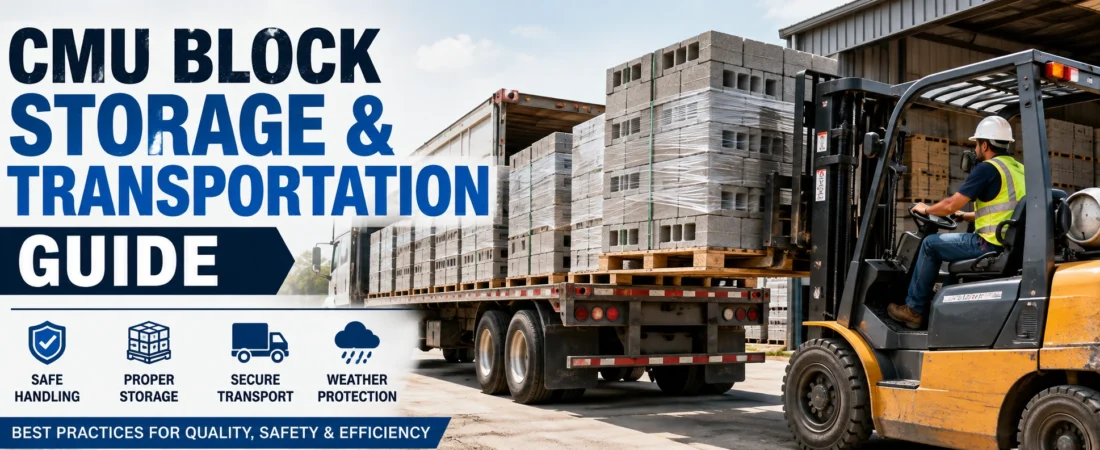
Concrete Masonry Units (CMU blocks) are manufactured to withstand heavy structural loads, but their strength can be significantly reduced if they are stored, handled, or transported improperly. Even high-quality blocks that meet ASTM standards can develop chipped corners, cracked faces, broken webs, or moisture-related damage before reaching the construction site if proper storage and transportation practices are not followed.
For manufacturers, distributors, contractors, and builders, understanding the correct methods of stacking, storing, loading, and transporting CMU blocks is essential to minimize material loss, reduce replacement costs, and maintain consistent product quality.
In this guide, you’ll learn industry best practices for storing and transporting CMU blocks safely, common mistakes to avoid, and practical techniques that help preserve block strength and appearance from the factory to the job site.
Why Proper CMU Storage and Transportation Matter
Many people assume that once a concrete block has been manufactured and cured, its quality remains unchanged. In reality, poor storage or rough transportation can damage blocks long before they are used in construction.
Proper storage and transportation help:
- Prevent chipped edges and broken corners
- Reduce cracked or damaged blocks
- Protect blocks from excessive moisture
- Maintain dimensional accuracy
- Preserve compressive strength
- Improve workplace safety
- Reduce material waste
- Lower transportation costs
- Increase customer satisfaction
For manufacturers, reducing handling damage can significantly improve profitability by minimizing rejected products and replacement shipments.
Common Causes of Damage During Storage and Transportation
Most damaged CMU blocks are not caused by manufacturing defects but by improper handling after production.
Some of the most common causes include:
- Improper stacking
- Uneven pallet loading
- Rough forklift operation
- Overloading trucks
- Moisture exposure
- Poor packaging
- Sudden impacts during transportation
- Long-term outdoor storage
- Unstable storage surfaces
Understanding these risks allows manufacturers and contractors to implement preventive measures before damage occurs.
When Can Freshly Manufactured CMU Blocks Be Moved?
Fresh concrete blocks should never be moved immediately after demolding.
Even though the blocks maintain their shape, they continue gaining strength during the curing process.
Moving blocks too early may result in:
- Broken corners
- Surface cracks
- Deformed edges
- Broken webs
- Permanent dimensional distortion
Manufacturers should always follow their curing schedule before transporting blocks to storage yards.
For a detailed explanation of curing requirements, see our CMU Block Curing Process Guide.Preparing Blocks for Storage
Proper preparation begins immediately after the curing process is complete.
Before moving blocks into storage, manufacturers should inspect each production batch for visible defects.
Inspect for:
- Surface cracks
- Broken corners
- Honeycombing
- Dimensional inaccuracies
- Color variation
- Damaged pallets
Only blocks that pass quality inspection should be transferred into long-term storage.
A strong inspection program helps prevent defective products from reaching customers. Learn more in our CMU Block Quality Control Guide.Choosing the Right Storage Area
The storage yard plays a critical role in maintaining block quality.
The ideal storage area should be:
- Flat and level
- Well-drained
- Free from standing water
- Easily accessible for forklifts
- Protected from excessive mud
- Designed to support heavy pallet loads
Uneven ground increases the risk of pallet tipping, block cracking, and forklift accidents.
Indoor vs Outdoor Storage
Manufacturers often choose between indoor and outdoor storage depending on available space and production volume.
Indoor Storage
Indoor storage provides the highest level of protection.
Advantages
- Protection from rain
- Reduced moisture exposure
- Cleaner blocks
- Better inventory control
- Lower risk of efflorescence
- Reduced freeze-thaw damage in cold climates
Disadvantages
- Higher construction cost
- Limited storage capacity
- Requires additional warehouse management
Outdoor Storage
Many manufacturers successfully store CMU blocks outdoors when proper precautions are taken.
Advantages
- Lower operating cost
- Large storage capacity
- Easy forklift access
- Faster truck loading
Disadvantages
- Rain exposure
- Dust accumulation
- Potential moisture absorption
- Greater temperature fluctuations
When storing blocks outdoors, proper drainage and weather protection become essential.
Ground Preparation for Storage
Never place pallets directly on soft soil or muddy surfaces.
Instead, prepare the storage yard using:
- Concrete pavement
- Asphalt
- Compacted gravel
- Crushed stone base
A stable surface prevents pallet settlement, improves forklift safety, and reduces the likelihood of block damage.
Organizing Storage Areas
Large manufacturing plants should organize storage into clearly marked sections.
Common storage zones include:
- Freshly cured blocks
- Quality-approved inventory
- Special-order products
- Colored architectural blocks
- Returned products
- Damaged inventory awaiting inspection
A well-organized storage yard improves inventory management and speeds up truck loading operations.
Proper Pallet Selection
The pallet is one of the most overlooked components in CMU transportation.
Weak or damaged pallets often fail under heavy loads, causing significant product loss.
Manufacturers typically use:
- Hardwood pallets
- Heavy-duty softwood pallets
- Steel pallets
- Plastic industrial pallets (for specialized operations)
Pallets should always be inspected before reuse.
Pallet Inspection Checklist
Before loading blocks, inspect pallets for:
- Broken boards
- Loose nails
- Cracked supports
- Warped surfaces
- Missing blocks
- Structural damage
Using damaged pallets greatly increases the risk of product loss during transportation.
Correct Block Stacking Methods
Proper stacking distributes weight evenly and minimizes movement during storage and transportation.
General stacking recommendations include:
- Align blocks uniformly
- Maintain straight vertical rows
- Keep pallet weight balanced
- Avoid leaning stacks
- Use consistent stacking patterns
- Prevent overhanging blocks
Proper stacking also makes forklift handling safer and more efficient.
Why Uniform Weight Distribution Matters
Uneven weight distribution places excessive stress on certain blocks within the pallet.
This can lead to:
- Broken lower blocks
- Pallet collapse
- Load shifting during transportation
- Forklift instability
Evenly distributed loads reduce transportation risks and improve worker safety.
Maximum Stacking Height
One of the most common causes of block damage is stacking pallets too high.
Excessive stacking places unnecessary pressure on the lower pallets, increasing the risk of cracked blocks, pallet failure, and worker injuries.
The maximum stacking height depends on several factors, including:
- Block size
- Block weight
- Pallet strength
- Storage duration
- Manufacturer recommendations
- Forklift capacity
Manufacturers should always follow pallet load ratings and avoid stacking beyond safe limits.
Safe Forklift Handling Practices
Forklifts move thousands of CMU blocks every day, making them one of the most important pieces of equipment in any concrete block manufacturing facility.
Improper forklift operation can quickly damage pallets and finished blocks.
Best Practices
Forklift operators should:
- Lift pallets evenly
- Keep forks fully inserted beneath the pallet
- Avoid sudden acceleration
- Avoid hard braking
- Lower loads before turning
- Transport loads slowly across uneven surfaces
- Maintain clear visibility while driving
Proper operator training significantly reduces product damage and workplace accidents.
Loading CMU Blocks onto Trucks
Truck loading should focus on maintaining load stability throughout transportation.
Each pallet should be positioned to distribute weight evenly across the trailer.
Before loading:
- Inspect pallets
- Verify block quality
- Check trailer condition
- Confirm trailer weight capacity
- Remove damaged products
Proper loading reduces movement during transit and minimizes product damage.
Securing Loads During Transportation
Heavy concrete blocks generate substantial force during sudden braking or sharp turns.
Loads should always be secured using appropriate restraint systems.
Common securing methods include:
- Heavy-duty ratchet straps
- Steel chains (where appropriate)
- Corner protectors
- Anti-slip mats
- Load bars
- Stretch wrapping
Properly secured loads reduce shifting, tipping, and product loss during transportation.
Weather Protection During Transportation
Although cured CMU blocks are durable, prolonged exposure to harsh weather can affect their appearance and handling characteristics.
During transportation, manufacturers should protect blocks from:
- Heavy rainfall
- Snow
- Excessive dust
- Road debris
- Prolonged standing water
Many manufacturers cover truckloads using waterproof tarps or protective shrink wrap to reduce moisture exposure.
Moisture Control During Storage
Moisture management remains important even after blocks have fully cured.
Poor moisture control may contribute to:
- Efflorescence
- Surface staining
- Mold growth on packaging materials
- Freeze-thaw damage in cold climates
- Inventory deterioration during long-term storage
Storage yards should include proper drainage systems that prevent water from accumulating beneath pallets.
To better understand how moisture affects concrete blocks, read our CMU Moisture Resistance Guide.Packaging Methods for CMU Blocks
Proper packaging protects blocks during handling while improving transportation efficiency.
Common packaging methods include:
Stretch Wrapping
Stretch film secures blocks tightly to the pallet and minimizes movement.
Benefits
- Prevents shifting
- Improves stability
- Protects against dust
- Helps reduce minor impact damage
Shrink Wrapping
Shrink wrap provides stronger weather protection than standard stretch film.
It is commonly used for:
- Long-distance transportation
- Export shipments
- Outdoor storage
Steel or Plastic Strapping
Many manufacturers use heavy-duty straps around palletized blocks.
Advantages include:
- Improved pallet stability
- Reduced block movement
- Better forklift handling
- Safer transportation
Long-Term Storage Best Practices
When blocks remain in storage for several weeks or months, manufacturers should inspect inventory regularly.
Recommended practices include:
- Inspect pallets monthly
- Replace damaged wrapping
- Remove broken blocks
- Maintain drainage systems
- Rotate inventory using the First-In, First-Out (FIFO) method
- Protect colored blocks from contamination
Regular inspections help identify problems before products are shipped to customers.
Transportation Safety Checklist
Before every shipment, verify the following:
✔ Pallets are undamaged
✔ Blocks are stacked evenly
✔ Trailer capacity is not exceeded
✔ Loads are securely strapped
✔ Protective wrapping is intact
✔ Forklift inspection completed
✔ Driver has verified load stability
✔ Delivery documents are complete
✔ Weather conditions have been considered
Following a standardized checklist greatly reduces transportation-related damage.
OSHA Safety Considerations
Although specific regulations vary by location, manufacturers should follow general workplace safety practices during CMU handling.
Important safety measures include:
- Train forklift operators
- Wear appropriate PPE
- Maintain clear travel paths
- Inspect lifting equipment
- Prevent overloaded pallets
- Follow safe lifting procedures
- Keep storage areas organized
A safe manufacturing environment protects both employees and finished products.
Common Storage and Transportation Mistakes
Many preventable problems occur because basic storage practices are overlooked.
Common mistakes include:
- Storing pallets on uneven ground
- Moving blocks before curing is complete
- Using damaged pallets
- Overloading trucks
- Improper forklift handling
- Inadequate load securing
- Allowing water to accumulate beneath pallets
- Ignoring routine pallet inspections
- Stacking blocks beyond safe height limits
- Transporting damaged products
Avoiding these mistakes significantly reduces product loss and improves customer satisfaction.
Storage Damage vs. Transportation Damage
| Storage Damage | Transportation Damage |
|---|---|
| Moisture exposure | Load shifting |
| Efflorescence | Corner breakage |
| Pallet settlement | Broken faces |
| Uneven stacking | Impact damage |
| Weather deterioration | Pallet collapse |
| Surface contamination | Strap damage |
| Long-term inventory deterioration | Forklift loading damage |
How Proper Storage Improves Profitability
Efficient storage and transportation practices do more than protect concrete blocks—they also improve overall business performance.
Benefits include:
- Lower product replacement costs
- Reduced warranty claims
- Improved customer satisfaction
- Faster loading operations
- Better inventory control
- Increased worker safety
- Lower transportation losses
- Higher production efficiency
For manufacturers producing thousands of blocks each day, even a small reduction in handling damage can result in substantial annual savings.
Frequently Asked Questions
How should CMU blocks be stored?
CMU blocks should be stored on a flat, well-drained surface using strong pallets. Blocks should be stacked evenly, protected from standing water, and kept in organized storage areas to minimize handling damage and maintain product quality.
Can CMU blocks be stored outdoors?
Yes. Properly cured CMU blocks can be stored outdoors if they are placed on stable ground with adequate drainage. Manufacturers often use shrink wrap or waterproof covers to protect blocks from prolonged rain, snow, and contamination.
What is the biggest cause of transportation damage?
Improper load securing is one of the leading causes of transportation damage. Unstable pallets can shift during braking, cornering, or rough road conditions, resulting in broken corners, cracked faces, and pallet collapse.
Should fresh CMU blocks be moved immediately after manufacturing?
No. Freshly molded blocks should remain in the curing area until they have gained sufficient strength. Moving blocks too early increases the risk of cracking, edge damage, and dimensional distortion.
Why is pallet quality important?
Damaged pallets may collapse under heavy loads, causing product loss and creating serious workplace safety hazards. Every pallet should be inspected before loading.
How can moisture affect stored CMU blocks?
Excessive moisture may contribute to efflorescence, staining, freeze-thaw damage in cold climates, and deterioration of packaging materials. Proper drainage and weather protection help minimize these risks.
What is the safest way to transport CMU blocks?
Blocks should be stacked evenly on strong pallets, secured using heavy-duty straps or shrink wrap, and transported on trailers that are rated for the total load weight. Forklift operators and drivers should also follow safe handling practices throughout loading and unloading.
How often should stored CMU blocks be inspected?
Manufacturers should inspect stored inventory regularly, especially during long-term storage. Routine inspections help identify damaged pallets, broken blocks, moisture issues, and other problems before products are shipped to customers.
Final Thoughts
Proper storage and transportation are just as important as manufacturing when it comes to producing high-quality concrete masonry units. Even blocks that meet ASTM requirements can suffer significant damage if they are stacked incorrectly, exposed to excessive moisture, handled carelessly, or transported without adequate load protection.
By following industry best practices for pallet selection, stacking, forklift handling, weather protection, packaging, and transportation, manufacturers can reduce product damage, improve workplace safety, lower operating costs, and deliver better-quality products to customers. Establishing standardized storage and transportation procedures is an investment that improves efficiency throughout the entire supply chain.
Related Calculators
- CMU Block Calculator
- Concrete Calculator
- Cement Calculator
- Sand Calculator
- Gravel Calculator
- Mortar Calculator