
Latest posts
-
CMU Block Face Shell & Web Thickness Guide: Dimensions, Types & Structural Role
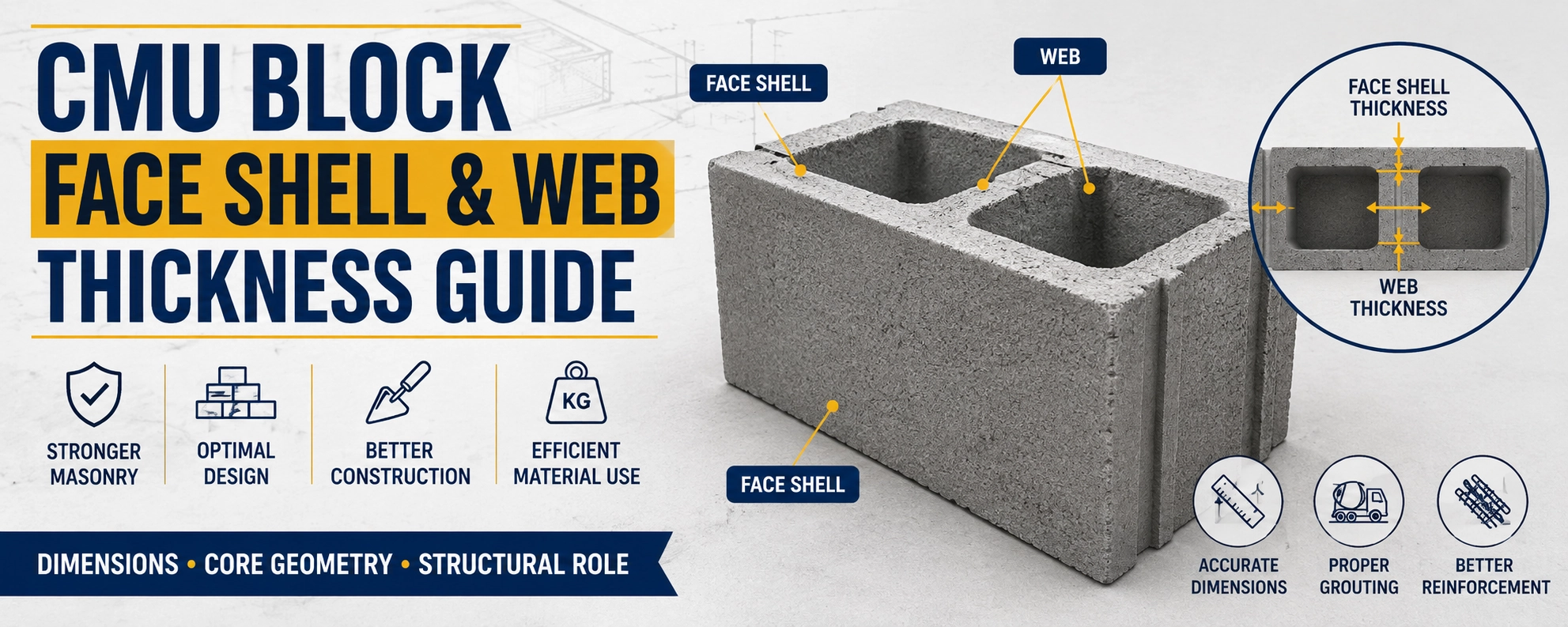
Concrete masonry units (CMU) are manufactured with a specific internal geometry that allows them to provide strength while reducing unnecessary material and weight. If you look inside a typical hollow concrete block, you will find face shells, webs, and hollow cores that work together to form the block. Understanding CMU face shell and web thickness…
-
CMU Block Surface Finishes Guide: Types, Textures, Colors & Best Applications
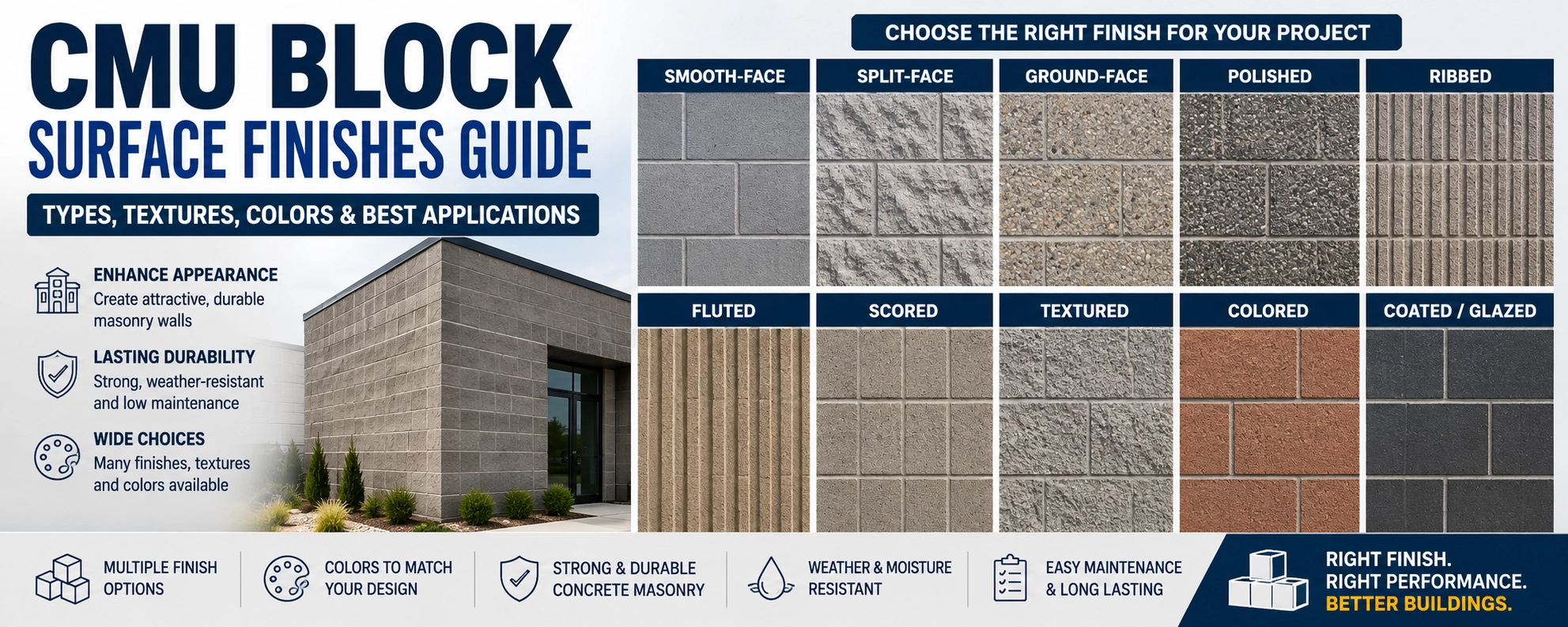
Concrete masonry units (CMU) are available in many different surface finishes, textures, colors, and patterns. While standard smooth concrete blocks are widely used for structural construction, architectural CMU finishes can provide a more attractive appearance for exposed masonry walls. The right CMU block surface finish can affect the appearance, texture, maintenance requirements, cleaning, color consistency,…
-
CMU Wall Anchoring Guide: Types, Installation, Embedment & Best Practices
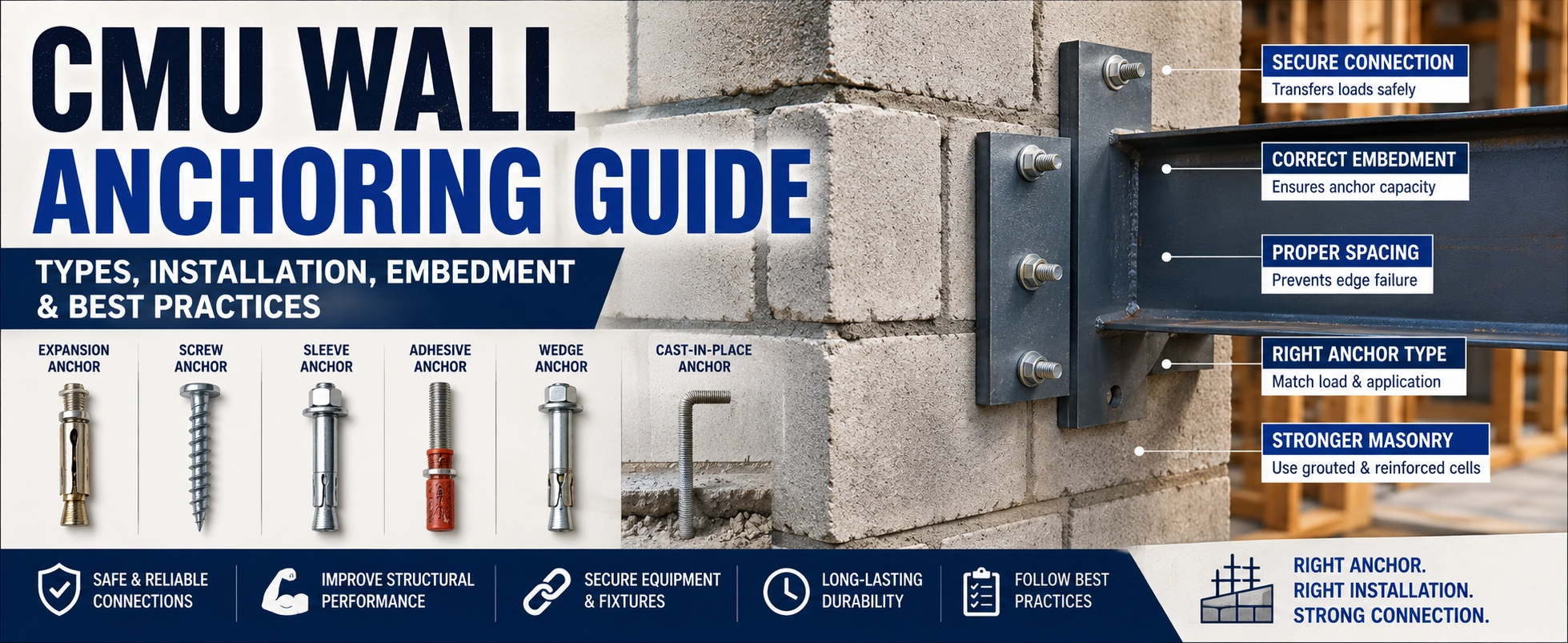
Concrete masonry unit (CMU) walls are commonly used for structural walls, foundations, basements, commercial buildings, garages, retaining walls, and other masonry construction. While CMU blocks provide excellent durability and compressive strength, many building components must be securely connected to the wall to ensure proper structural performance. This is where CMU wall anchoring becomes important. Anchors…
-
CMU Wall Drainage Guide: Weep Holes, Flashing, Drainage Systems & Best Practices
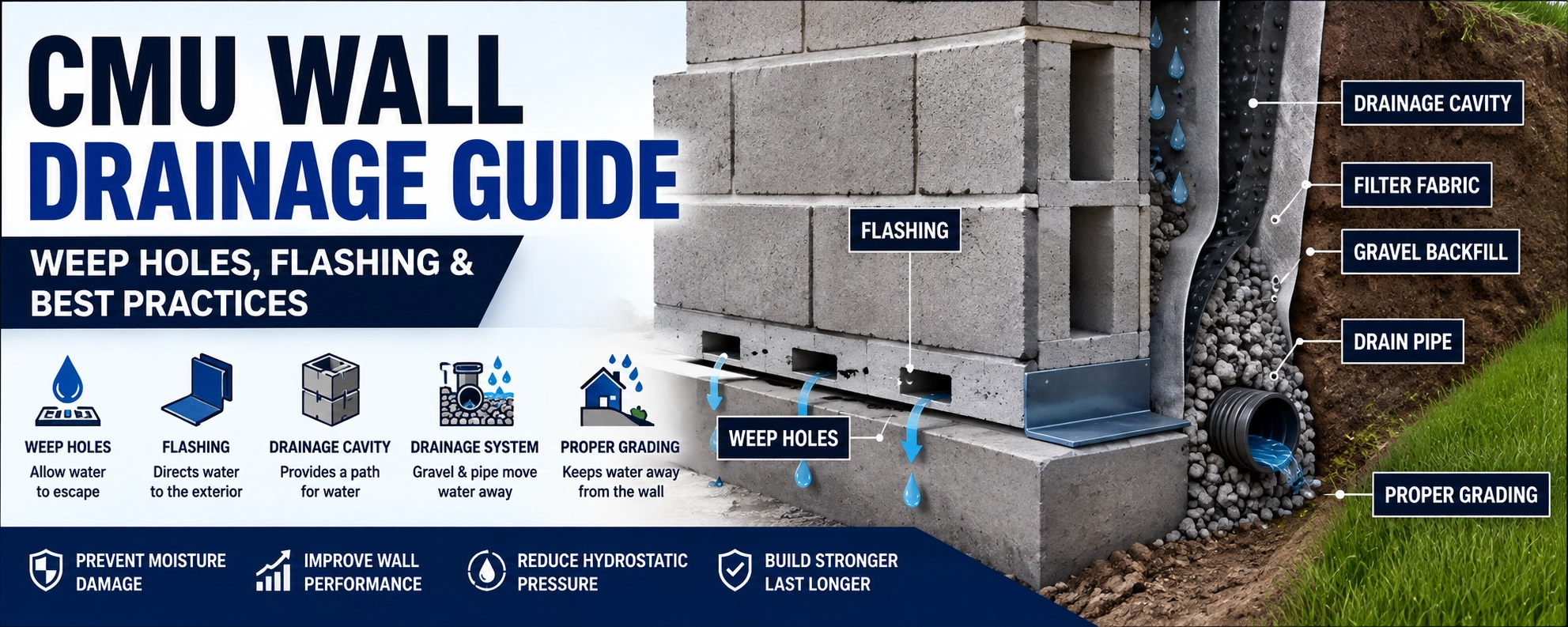
Concrete masonry unit (CMU) walls are strong, durable, and widely used in residential, commercial, industrial, foundation, basement, and retaining wall construction. However, even a properly constructed CMU wall can experience moisture problems if water does not have a proper path to drain away. A well-designed CMU wall drainage system collects water that enters the wall…
-
CMU Block Storage & Transportation Guide: Best Practices for Safe Handling and Delivery
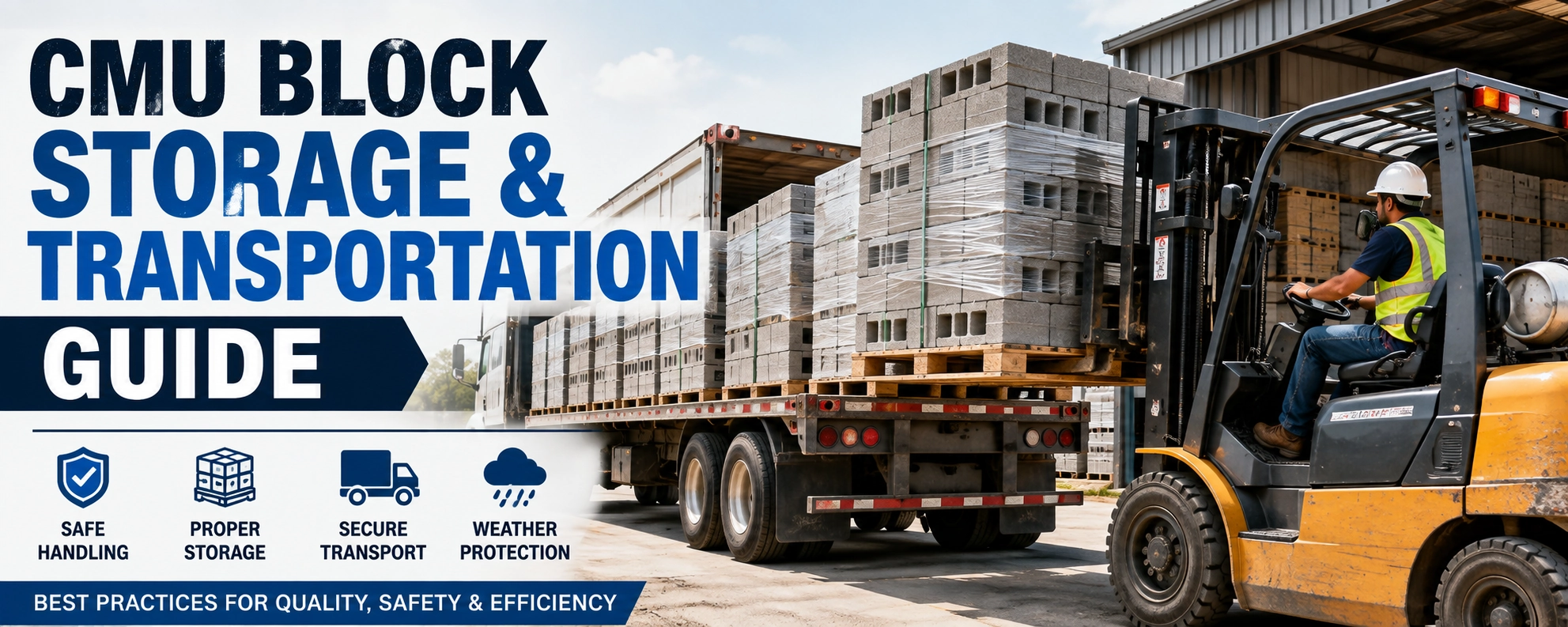
Concrete Masonry Units (CMU blocks) are manufactured to withstand heavy structural loads, but their strength can be significantly reduced if they are stored, handled, or transported improperly. Even high-quality blocks that meet ASTM standards can develop chipped corners, cracked faces, broken webs, or moisture-related damage before reaching the construction site if proper storage and transportation…
-
Common CMU Manufacturing Defects: Causes, Prevention & Solutions
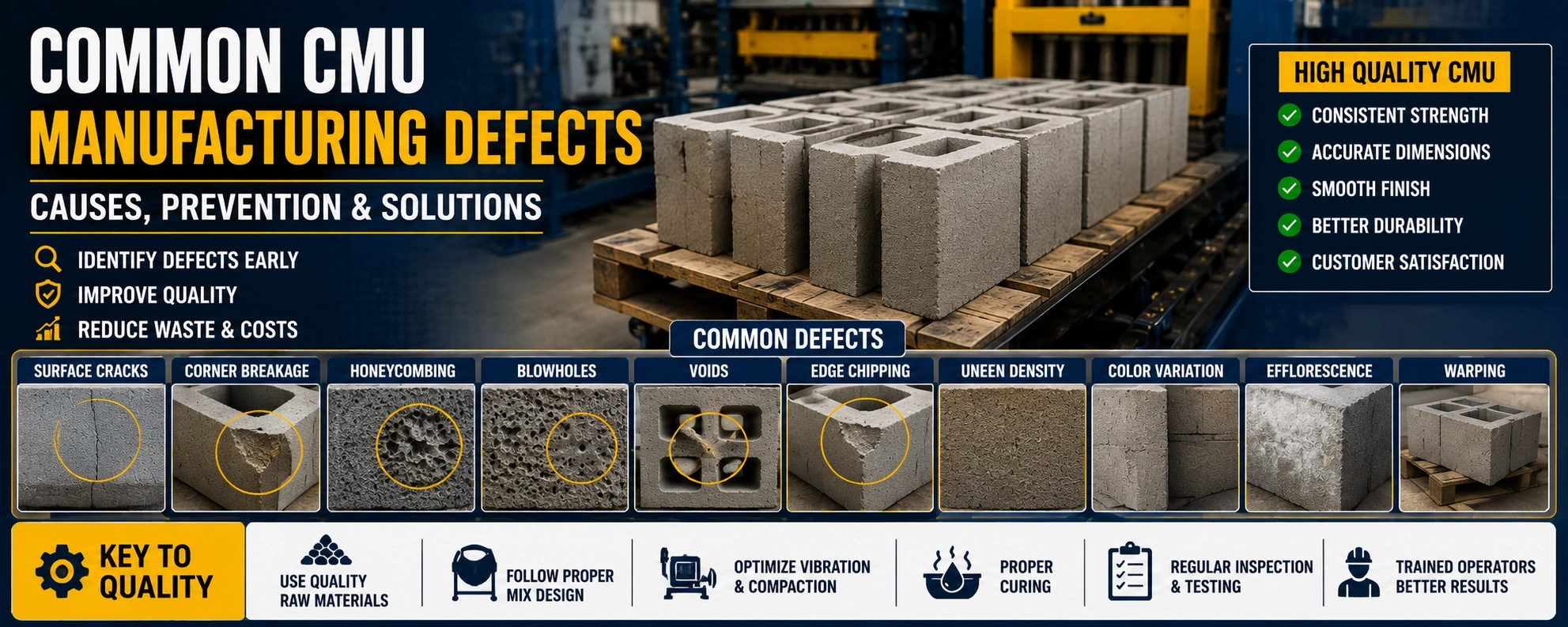
Manufacturing high-quality Concrete Masonry Units (CMUs) requires much more than using good raw materials. Every stage of the production process—from batching and mixing to molding, curing, and storage—must be carefully controlled. Even a small mistake in moisture content, vibration, hydraulic pressure, or curing can result in defective blocks that fail to meet quality standards. CMU…
-
CMU Block Manufacturing Machine Guide: Types, Working Process, Prices & Buying Tips
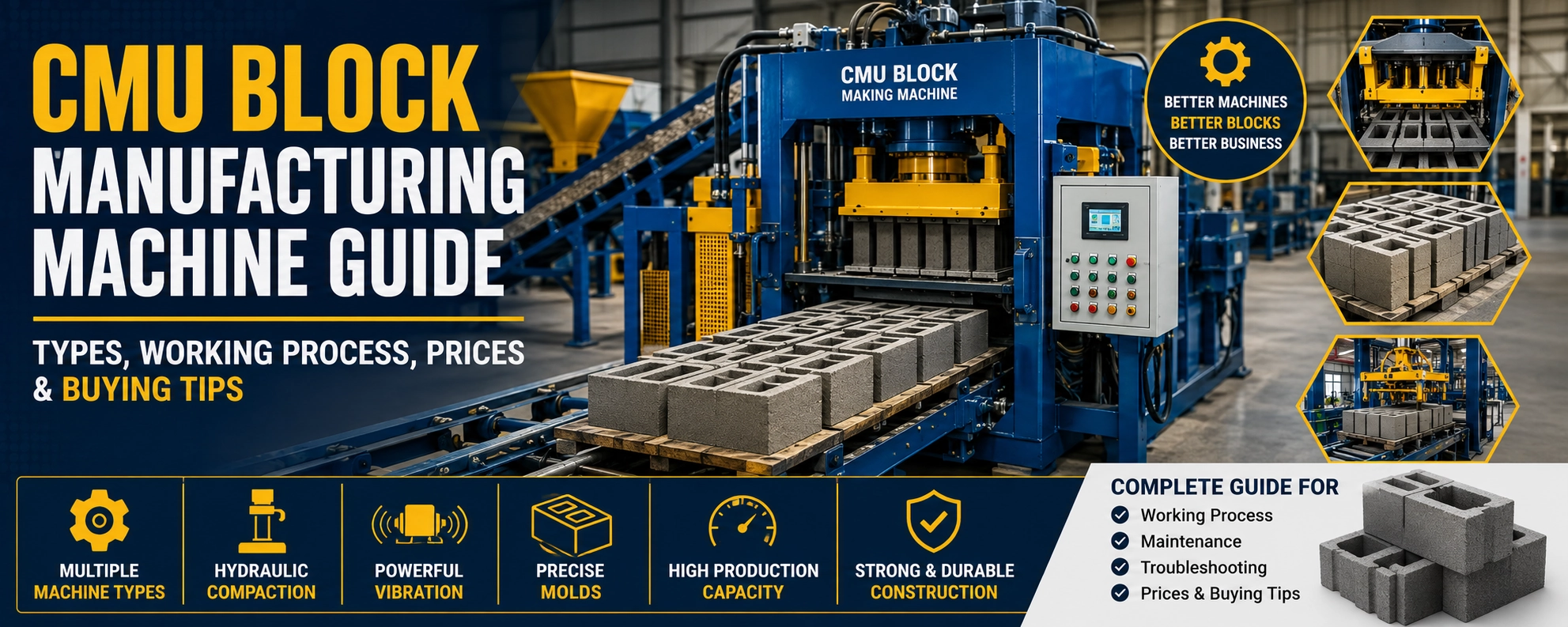
Manufacturing high-quality Concrete Masonry Units (CMUs) requires meore than a good mix design. The machine used to produce the blocks plays a critical role in determining their strength, dimensional accuracy, production speed, and overall quality. Whether you operate a small startup or a large-scale manufacturing plant, choosing the right CMU block manufacturing machine can significantly…
-
CMU Block Curing Process: Methods, Time, Temperature & Best Practices

Concrete masonry units (CMU) are only as strong as the curing process that follows manufacturing. Even if a block is produced using high-quality cement, properly graded aggregates, and an optimized mix design, inadequate curing can significantly reduce its strength, durability, and long-term performance. Curing is the process of maintaining adequate moisture and temperature so the…
-
CMU Block Mix Design Guide: Ratios, Materials, ASTM Standards & Best Practices
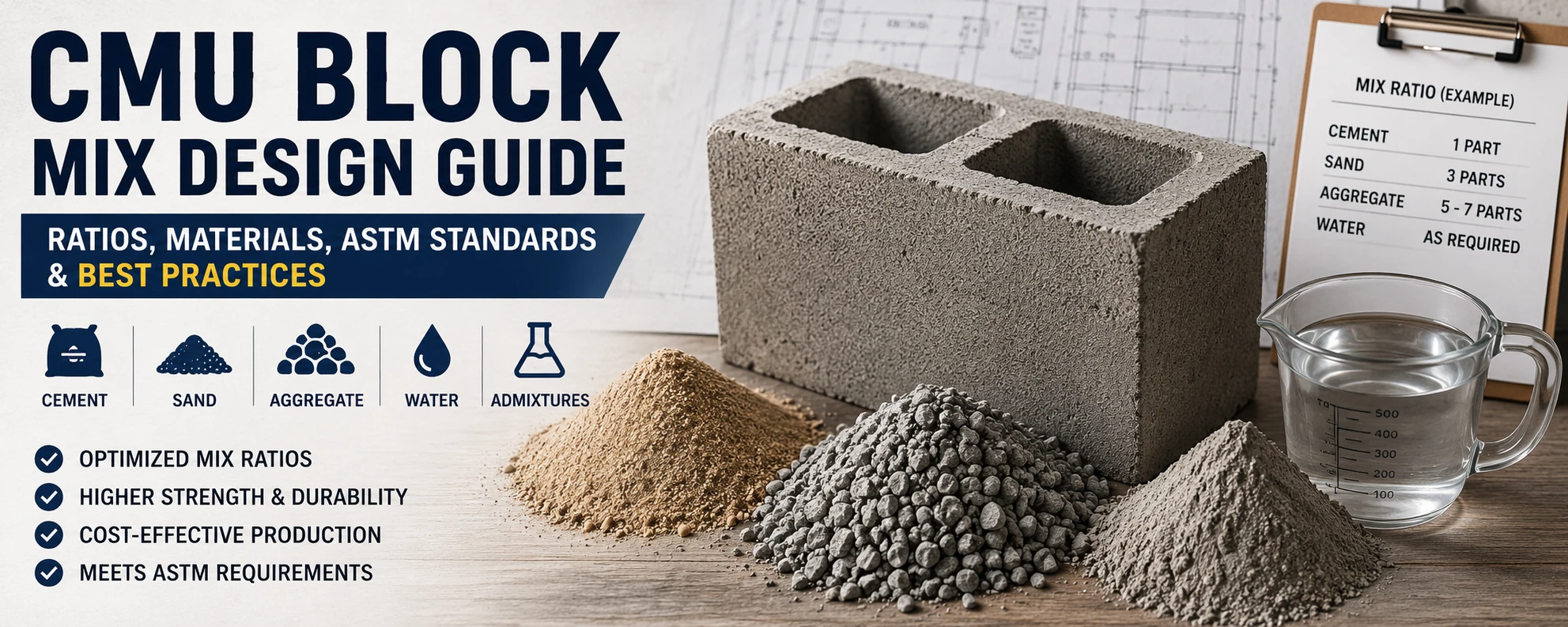
CMU (Concrete Masonry Unit) block mix design is one of the most important factors determining the strength, durability, density, appearance, and overall quality of concrete masonry units. Whether you manufacture concrete blocks commercially, operate a block production plant, or simply want to understand how concrete blocks are made, selecting the correct mix design is essential…
-
CMU Block ASTM Standards Explained
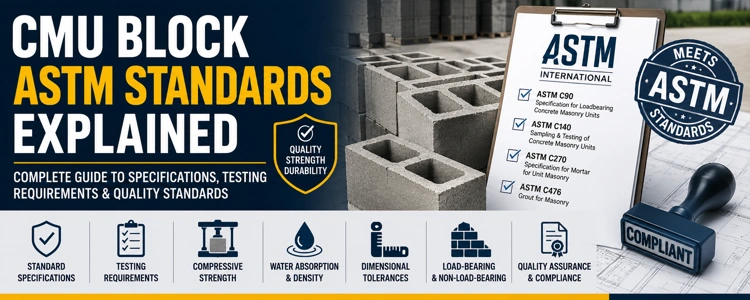
Concrete Masonry Units (CMUs) are used in residential, commercial, industrial, and infrastructure construction throughout the United States. To ensure these concrete blocks meet consistent quality, strength, durability, and dimensional requirements, manufacturers follow recognized industry standards. One of the most widely referenced organizations in the construction industry is ASTM International, which develops technical standards for building…